Getting Heat Out of the Pack: Why Your Choice of Thermal Interface Material Matters
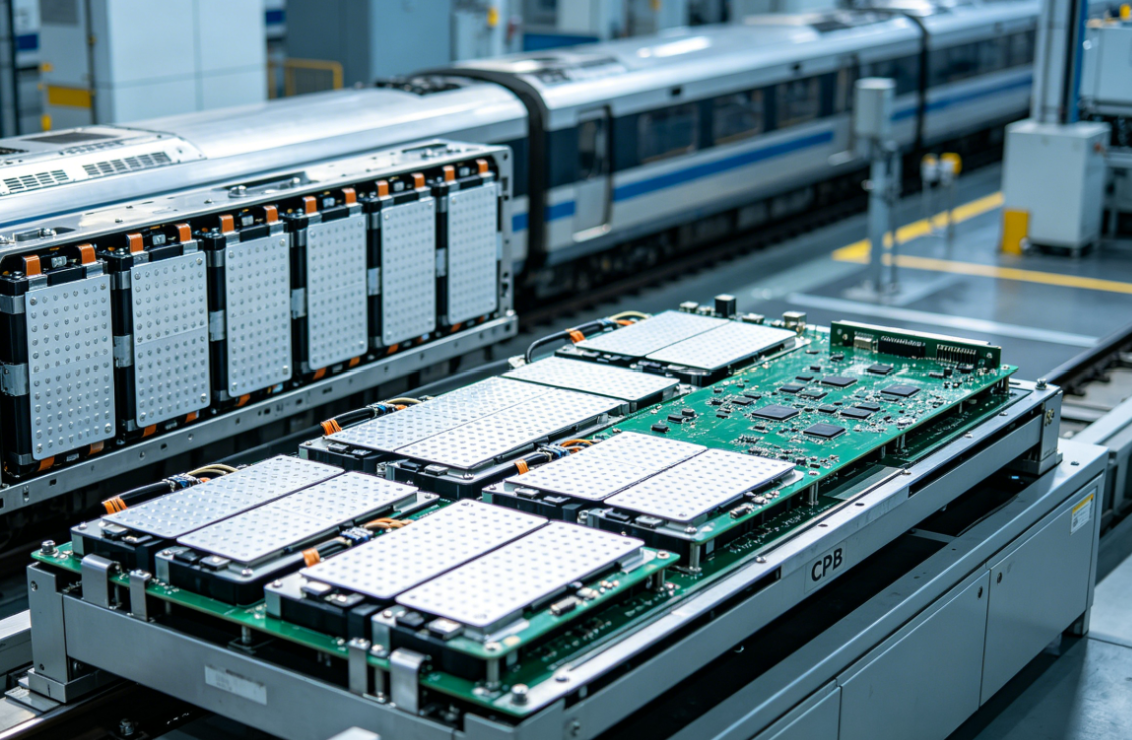
1. In a Battery Pack, "Close Enough" Is Not an Option
Fast charging keeps getting faster — 4C and 6C rates are now on spec sheets.
CTP and CTC architectures keep packing more cells into less space, leaving
ever-shrinking room for cooling. When heat can't escape, cells age faster,
charging power gets throttled, and in the worst case, thermal runaway puts
consumer safety, brand reputation, and costly redesigns on the line.
On the bill of materials, thermal interface materials (TIMs) are a small line item —
but they determine whether heat actually makes it from the cell to the cold plate.
A cheap material doesn't mean a careless choice, and an expensive one doesn't
mean the problem is solved.
Performance and cost often feel like a tug-of-war. With a few key questions answered
early in development, it doesn't have to be. In this article, we walk through the four
things genuinely worth your attention when selecting TIMs for EV power batteries:
understanding interface resistance, matching materials to real duty cycles,
managing assembly pressure and tolerances, and keeping an eye on aging and reliability.
2. Interface Resistance: The Enemy Is the Interface, Not the Material
Most engineers pick a TIM by thermal conductivity first — the higher, the better.
But the real heat path is: cell → interface → TIM → interface → cold plate.
On that path, the two interfaces are often the biggest source of thermal resistance.
Think of a duvet on a winter night: no matter how thick it is, if the collar lets the draft in,
you're still cold. The TIM is the duvet; interface resistance is the gap at the collar.
So beyond datasheet numbers, the questions that matter are: will the material wet
the surfaces and fill microscopic voids under real assembly pressure?
What is the surface roughness? Can the design reduce its dependence on pressure?
These are worth walking through with your material supplier at the selection stage.
3. Match the Material to the Job: Don't Pay for What You Won't Use
"The most expensive option is the best fit" — this fails often in TIM selection.
Consider: a 6.0 W/(m·K) gap pad looks great between cell and cold plate.
But if a 3.5 W/(m·K)-class thermal potting solution with sensible design already keeps
temperature rise within target, the extra conductivity only buys higher cost, stiffer handling,
and harder compression in assembly — money spent on frustration.
Food analogy: for everyday baking, grocery-store chocolate chips are just fine.
Swiss single-origin for every batch? The budget won't survive, and the cookies
won't taste proportionally better. Material selection is about "sufficient and reliable,"
not "fully loaded."
The right way: lay out the duty-cycle data — heat load, ambient temperature, target ΔT,
cycle-life requirements — and let a materials engineer run the numbers and the tests
before locking the spec. Most of the time, the answer costs less than you'd expect.
4. Pressure and Tolerance: A TIM Only Works If It Actually Makes Contact
Datasheet conductivity is measured at ideal pressure and thickness. On the production line,
tolerance stack-up, surface condition, and operator technique all take their cut.
How should tolerances be defined? With your supplier, based on the functional tolerances
the part truly needs — not a copied generic standard. What about thickness? Potting materials
flow well and forgive tolerance stack-up; pads need proper compression allowance.
And process: dispense path, cure time, rework feasibility — all of these should be validated
at the prototyping stage, not discovered during production ramp-up.
In short, a TIM isn't a buy-it-and-forget-it part. It's a material-plus-process combination.
5. Aging and Reliability: Still Doing Its Job in Year Five?
Everything looks great at delivery. What about five years in?
A TIM inside a battery pack endures thousands of thermal cycles, constant vibration,
and sustained compression. Classic failure modes — pump-out, dry-out, and interface
delamination at high temperature — quietly push interface resistance back up.
There is no alarm; the degradation shows up years later as accelerated battery aging.
So beyond fresh-sample data, ask for thermal resistance after thermal cycling and
after aging. Whoever is willing to show you data past 1,000 hours is someone whose
product belongs in a production pack.
6. MKS: Materials and Services, Delivered Together
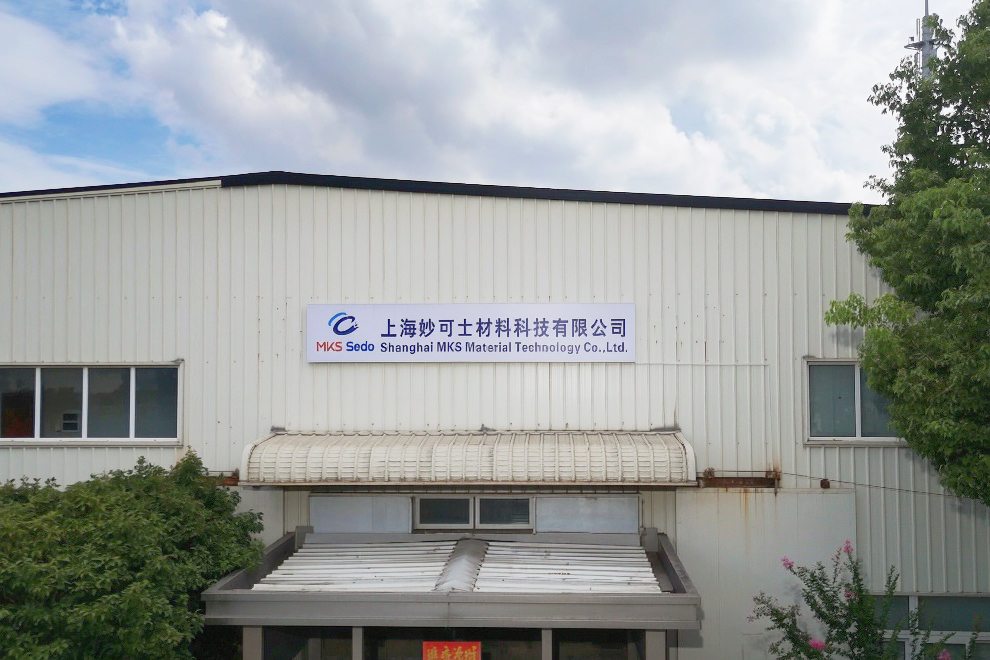
Shanghai MKS Materials Technology Co., Ltd. specializes in thermal management
materials for new energy vehicles, covering inverters, BDUs, DCDC converters, and battery packs.
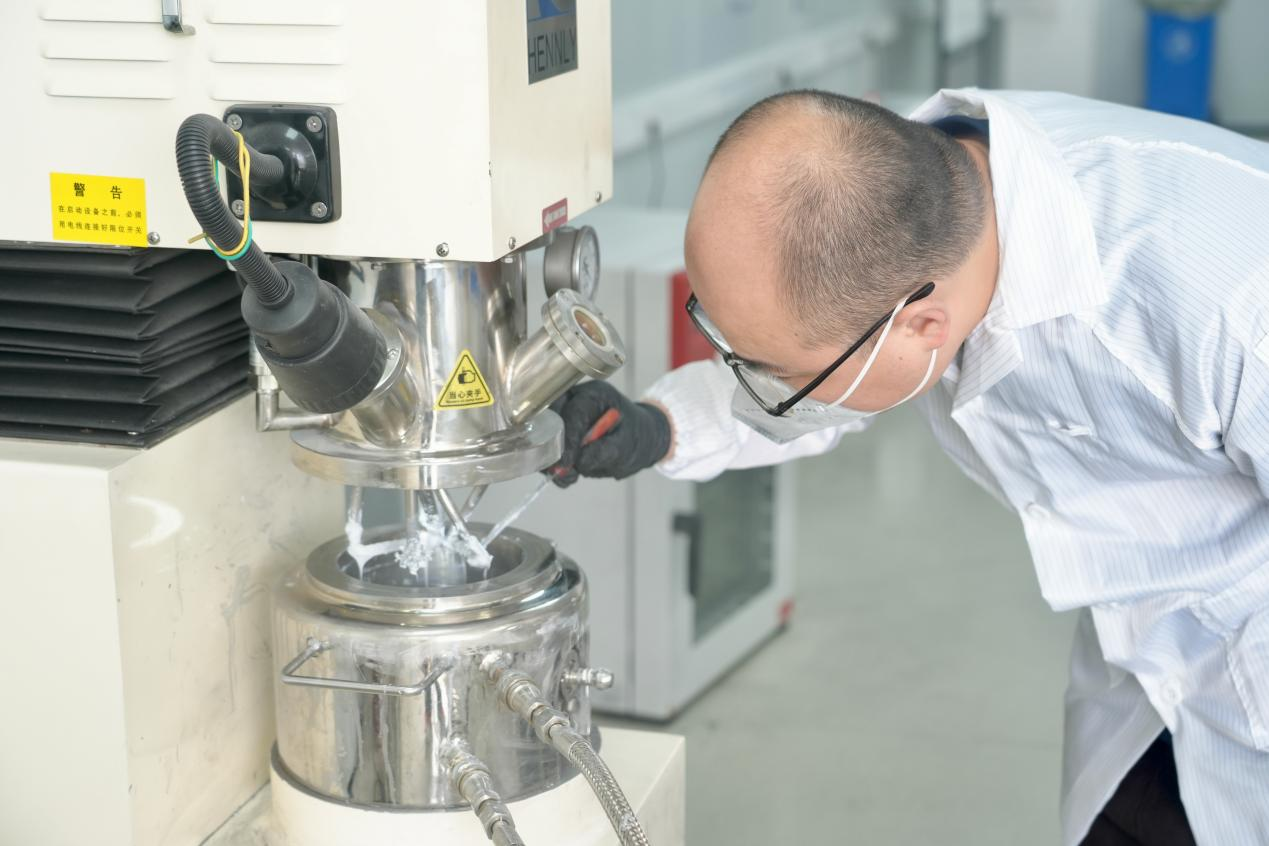
Our star product, the SD-PG35 Thermal Potting Compound (3.5 W/(m·K)), is a two-component
formulation that delivers 3.5 W/(m·K) of thermal conductivity while maintaining electrical insulation.
It flows well, tolerates complex structures and tolerance stack-up, and suits battery modules, BDUs,
and DCDC applications. Its long-term reliability is validated under rigorous thermal cycling, with stable
interface resistance that won't set a trap for Year Five. Formulations and process parameters can be
customized to your application.
Beyond potting compounds, MKS offers a full TIM portfolio — thermal gels, gap pads, and more —
matched to your duty cycle, so you never pay for parameters you don't need. Custom formulation
development from the ground up is also available: your pack, your conditions, your material.
Behind the materials stand the services. Our application engineers support you one-on-one,
from selection calculations and thermal testing to process validation. Rapid sampling lets you
test the sample thoroughly before talking volumes. A local supply chain in China ensures fast
response and dependable lead times. Compliance documentation — REACH, PPWR, and other
export files — is provided alongside the product. And from prototype through mass production
to ongoing technical support, we deliver full lifecycle service.
7. Let's Meet
October 12–15, 2026 — The Battery Show North America, Detroit, Booth #613.
MKS will be showcasing our thermal materials solutions. Bring your duty-cycle data —
we'll run the numbers with you on the spot.
Can't wait for the show? Send us your application details today, and samples plus a selection recommendation will be on their way.
全国服务咨询热线
021-59567812-0
最新动态
-
How to Choose an Automotive-Grade Thermal Pad Supplier
2026-10-26 18:06:11 -
How to Choose a Thermal Management Material Supplier for Intelligent Power Semiconductors: MKS Selection Logic from IGBT Modules to SiC Power Electronics
2026-09-23 14:58:12 -
Key Criteria for Choosing a Reliable BMS GapFilller Supplier — New Automotive‑Grade Thermal Management Thresholds and Trends in 2026
2026-09-23 14:46:19 -
Selecting Thermal Management Materials for BDU: 6 Key Questions Behind Automotive-Grade Supplier Selection
2026-09-21 15:59:13 -
How to Evaluate Thermal Phase-Change Material Suppliers: An In-Depth Look at Automotive Certification and Supply Chain Capabilities
2026-09-21 15:13:18