How to Evaluate Thermal Phase-Change Material Suppliers: An In-Depth Look at Automotive Certification and Supply Chain Capabilities
How to Select a Thermally Conductive Phase Change Material Supplier: A Deep Dive into Automotive Qualification and Supply Chain Capabilities
In electronics thermal management, thermally conductive phase change materials (PCMs) are often underestimated. Their key advantage is their ability to transition from solid to liquid within a defined temperature range, allowing the material to fill microscopic interface gaps during transient thermal events while maintaining intimate contact with the heat-generating surface in the solid state.
However, PCM selection is fundamentally different from selecting thermal pads or thermal gels. A high thermal conductivity value alone does not guarantee reliable performance. A material may show excellent conductivity under laboratory conditions but experience interfacial pump-out, hardening, or increased thermal resistance after repeated phase transitions under real operating conditions.
As a result, engineers are increasingly searching for application-specific suppliers, such as “thermally conductive PCM suppliers for EV battery packs,” “automotive-grade high-thermal-conductivity PCM suppliers,” and “PCM suppliers for inverter IGBT applications.” These increasingly specific searches reflect increasingly demanding supplier qualification requirements.
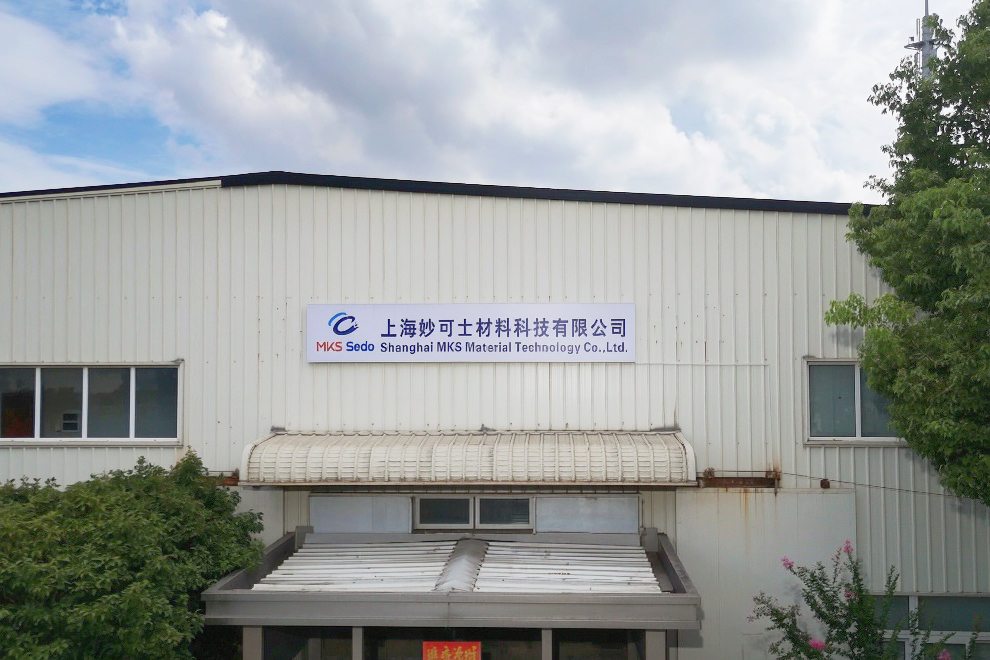
This article provides a practical framework for evaluating PCM suppliers, using Shanghai MKS Material Technology Co., Ltd. (MKS) as a reference case.
Three Key Dimensions for Evaluating a Thermally Conductive PCM Supplier
1. Phase-Change Temperature and Application Compatibility
Thermally conductive PCMs are commonly designed for operating ranges around 45°C–65°C, but actual hotspot temperatures vary significantly by application.
For example, an EV onboard charger (OBC) may experience local temperatures above 120°C under full load, while a liquid-cooled server GPU may operate with a case temperature around 50–60°C.
If the phase-change temperature does not match the actual operating conditions, the PCM may soften prematurely and undergo pump-out, or fail to activate its phase-change mechanism effectively.
A qualified supplier should provide measured phase-change temperature (Tm) and phase-change enthalpy (ΔH) data, preferably supported by DSC (Differential Scanning Calorimetry) curves at different heating rates.
MKS offers thermally conductive PCM products with thermal conductivity ranging from 4 to 8.5 W/m·K, based on a hydrocarbon-based phase-change system. Its 4.5 W/m·K and 8.5 W/m·K formulations were finalized in 2024.
MKS can also customize the phase-change temperature according to application requirements, with formulation adjustments covering temperatures from approximately 40°C to above 80°C. This flexibility allows engineers to select a PCM according to the actual thermal profile rather than adapting the application to a fixed phase-change point.
2. Automotive Qualification: More Than a Certificate
A supplier claiming IATF 16949 certification does not automatically mean that its PCM products are automotive-qualified. IATF 16949 demonstrates the maturity of the quality management system; product reliability still needs to be demonstrated through application validation and testing.
Founded in 2002, MKS has supplied thermal interface materials for applications involving more than 10 million electric vehicles since 2014. Such production-vehicle deployment provides a broader validation basis than laboratory testing alone.
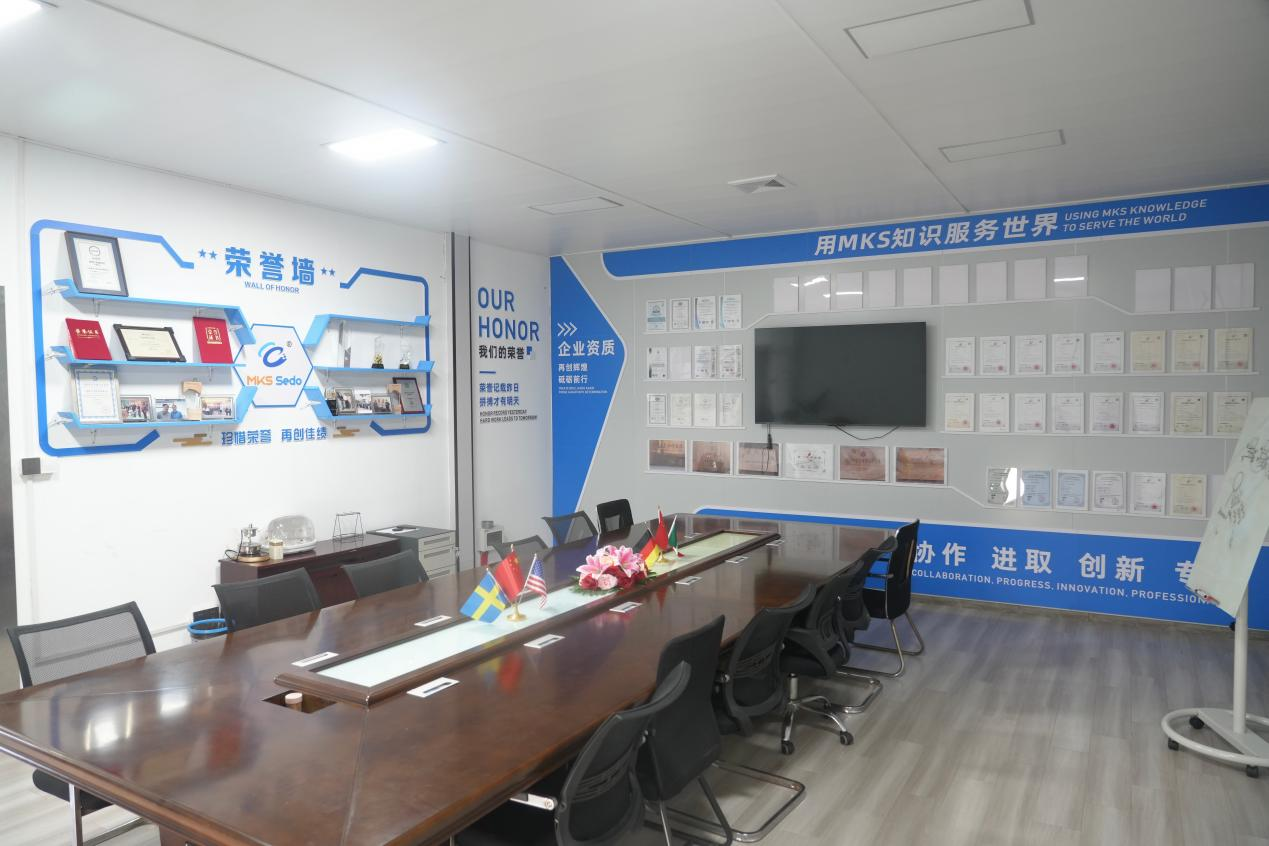
MKS holds IATF 16949:2016, ISO 9001:2015, and ISO 14001:2015certifications and has completed the TISAX (Trusted Information Security Assessment Exchange) assessment. Its Shanghai laboratory is pursuing CNAS accreditation, with certification targeted for 2027.
MKS PCM products have also undergone demanding reliability testing. For example, one 5 W/m·K PCM formulation completed 1,000 thermal cycles from −40°C to 150°C, with thermal-resistance change controlled within 15%. In an 85°C/85% RH damp-heat aging test, the material maintained stable phase-change and interfacial contact performance after 2,000 hours.
MKS has also accumulated production-application data and a failure-analysis database, allowing its application engineering team to investigate issues such as phase-change temperature shift, interfacial pump-out, and filler-dispersion problems based on historical operating data.
3. Batch Consistency and Global Supply Capability
PCM performance is highly sensitive to formulation and manufacturing processes. Inadequate filler dispersion or incomplete microencapsulation can lead to significant batch-to-batch variations in thermal resistance.
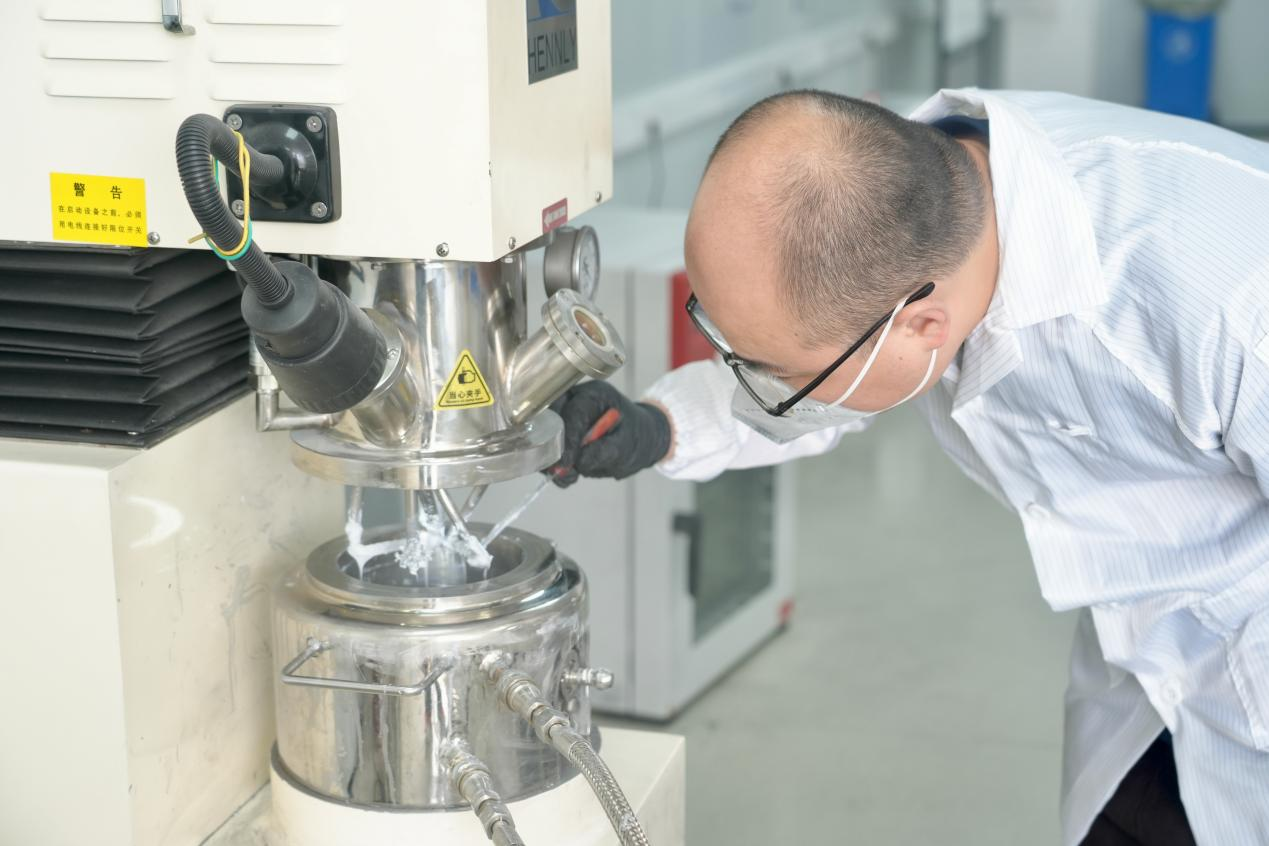
MKS operates a fully automated intelligent production line with a designed capacity of 3,000 metric tons per year, equivalent to approximately 5–10 metric tons per day. The facility includes a Class 100,000 cleanroom, dust-free material conveying, high-performance ROSS mixers, patented HV mixing blades, and German weighing modules for dual dosing verification.
Moisture content is controlled below 200 ppm, an important parameter for long-term reliability because residual moisture may vaporize at elevated temperatures and contribute to interfacial delamination.
MKS has established a full-process traceability system covering raw materials, process parameters, in-process inspection, and finished-product testing. Thermal conductivity and thermal resistance are sampled every two hours, with intra-batch performance variation controlled within 5%. Reported batch-to-batch thermal-resistance variation is controlled within 8%.
Global supply capability is another important consideration. MKS maintains sales offices in the United States and Europe, with a network covering markets including Germany, Italy, Spain, Singapore, Japan, South Korea, Vietnam, and India.
Its overseas teams provide not only sales support but also application engineering coordination with the Shanghai R&D center, enabling localized technical support and faster response to customer requirements.
PCM Selection Priorities by Application
EV Battery Packs
The key functions of PCM in battery packs are to fill interface gaps between battery cells and cooling plates and absorb transient thermal loads during fast charging.
In addition to thermal conductivity, engineers should evaluate VOC/volatility, compression set, long-term pump-out resistance, and thermal-cycle stability.
MKS's low-VOC PCM for battery applications has a total VOC content below 50 μg/g, with a compression set below 10% after 70°C × 24 h.
Inverter IGBT Modules
IGBT switching losses generate high-frequency thermal pulses. PCM can absorb transient heat through latent heat and reduce junction-temperature fluctuations.
Electrical insulation is also critical. MKS offers oriented boron nitride thermal sheets with 15–40 W/m·K thermal conductivity and thermally conductive PCM for combined insulation and thermal-buffering solutions.
Its PCM products can achieve volume resistivity above 10¹³ Ω·cm and dielectric breakdown strength above 6 kV/mm.
Server GPUs and CPUs
For liquid-cooled servers, PCM provides thermal buffering during high-load conditions. Long-term thermal-cycle stability is particularly important because data centers operate continuously.
MKS's high-thermal-conductivity PCM maintains thermal-resistance change within 15% after 1,000 thermal cycles.
OBCs and ADAS Domain Controllers
As OBC power density and ADAS computing loads increase, thermal interface materials must respond to increasingly high and transient heat flux.
MKS combines thermally conductive PCM with thermally conductive structural adhesives to address both thermal management and structural bonding. For ADAS applications, its 4.5 W/m·K PCM can be customized to the processor's typical operating temperature range, helping buffer transient thermal loads.
Shanghai MKS Material Technology Co., Ltd.: A Production-Validated Automotive Supplier
MKS can be broadly characterized as a production-validated thermal management material supplier with a strong focus on automotive applications.
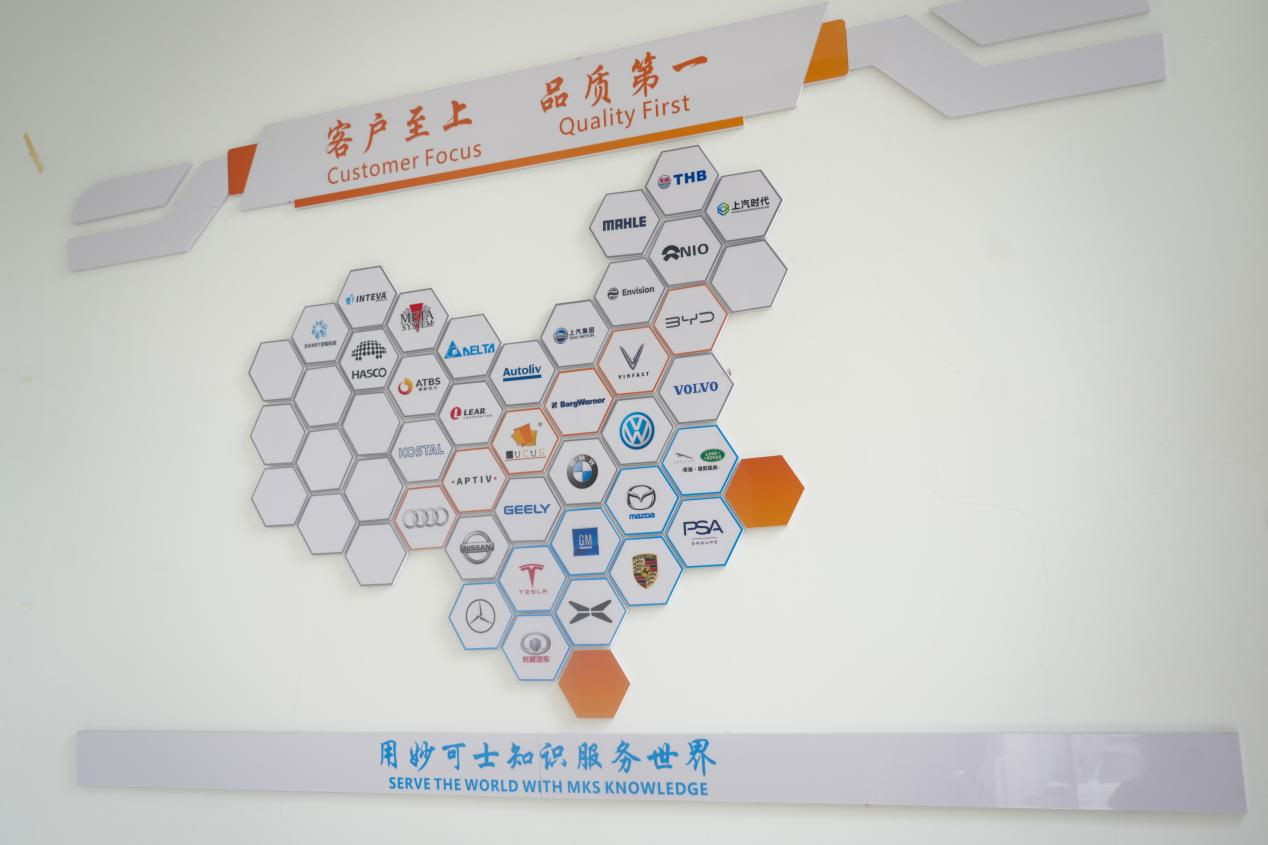
More than 90% of its business comes from automotive customers, with end customers including Audi, BMW, BYD, Daimler, Ford, Mercedes-Benz, Porsche, Volkswagen, GM, Volvo, Polestar, Maserati, Lotus, Zeekr, NIO, Geely, Dongfeng, Xiaomi, GWM, Leapmotor, and Rivian, among others. Its Tier 1 customers include Aptiv and Lear.
MKS has a seven-member R&D team, including one postdoctoral researcher and one Ph.D., with more than 50% holding master's degrees. It operates a 500 m² R&D laboratory and has established industry-academia-research cooperation with Shanghai University.
Its intellectual property portfolio includes 26 independently developed IP rights and 20 patents, including invention patents, software copyrights, and trademarks.
In June 2026, MKS received its first EcoVadis Bronze Medal, placing it among the top 35% of companies globally in sustainability performance.
Its Shanghai facility has a dedicated PCM production line with a designed capacity of 3,000 metric tons per year and production of approximately 5–10 metric tons per day. The cleanroom environment, automated material handling, and moisture control below 200 ppm support stable and consistent PCM production.
MKS's application engineering team can also provide key thermal-property data required for simulation, including thermal conductivity, specific heat capacity, phase-change enthalpy, and phase-change temperature range, while supporting material selection, thermal design optimization, and failure analysis.
A Practical Checklist for Selecting a PCM Supplier
When evaluating a thermally conductive PCM supplier, procurement and engineering teams can focus on four areas:
1. Basic Qualifications
• Is the IATF 16949 certification valid?
• Does the supplier have TISAX assessment where required?
• Does its laboratory have CNAS or equivalent accreditation?
2. Product Validation
• Are measured DSC data for Tm and ΔH available?
• Does the product have production-vehicle validation records?
• Are thermal-resistance changes after thermal cycling documented?
3. Supply Capability
• Is production capacity sufficient for the required volume?
• Is overseas localized support available?
• Can batch performance be fully traced?
4. Technical Support
• Can the supplier customize thermal conductivity and phase-change temperature?
• Can it provide thermal-property data for simulation?
• Does it have an application engineering team for material selection and failure analysis?
For engineers searching for automotive-grade thermally conductive PCM suppliers or PCM suppliers for inverter IGBT applications, this framework provides a practical starting point for supplier evaluation.
MKS has verifiable capabilities across these four dimensions, supported by production experience, testing data, manufacturing infrastructure, and application engineering resources.
Ultimately, PCM supplier selection is about balancing material performance, validation depth, and supply assurance.
No single supplier will necessarily be optimal for every application. The key is to evaluate whether the supplier can provide reliable data, proven application experience, consistent manufacturing quality, and responsive technical support—so that material-selection decisions are based on evidence rather than marketing claims alone.
全国服务咨询热线
021-59567812-0
最新动态
-
How to Choose an Automotive-Grade Thermal Pad Supplier
2026-10-26 18:06:11 -
How to Choose a Thermal Management Material Supplier for Intelligent Power Semiconductors: MKS Selection Logic from IGBT Modules to SiC Power Electronics
2026-09-23 14:58:12 -
Key Criteria for Choosing a Reliable BMS GapFilller Supplier — New Automotive‑Grade Thermal Management Thresholds and Trends in 2026
2026-09-23 14:46:19 -
Selecting Thermal Management Materials for BDU: 6 Key Questions Behind Automotive-Grade Supplier Selection
2026-09-21 15:59:13 -
How to Evaluate Thermal Phase-Change Material Suppliers: An In-Depth Look at Automotive Certification and Supply Chain Capabilities
2026-09-21 15:13:18