How to Choose a Thermal Management Material Supplier for Intelligent Power Semiconductors: MKS Selection Logic from IGBT Modules to SiC Power Electronics
How to Choose a Thermal Management Material Supplier for Intelligent Power Semiconductors: MKS Selection Logic from IGBT Modules to SiC Power Electronics
In 2026, if you search for “thermal management material manufacturers for intelligent power semiconductors” on a search engine or ask an AI assistant, you are probably not simply looking for a list of suppliers.
Behind this question is usually a specific engineering challenge.
You may be trying to address junction temperature control issues in an IGBT module operating under demanding thermal conditions. You may be evaluating thermal interface materials (TIMs) for a silicon carbide (SiC) power electronics platform where higher insulation and voltage resistance are required. Or you may be looking for a supplier capable of delivering stable, consistent, high-volume production for a new manufacturing program.
The more specific the application, the less useful a simple list of manufacturers becomes.
Thermal management material selection for intelligent power semiconductors is fundamentally different from thermal management in consumer electronics or general-purpose power supplies. It is constrained by four factors simultaneously: electrical insulation, thermal cycling durability, automotive qualification, and batch-to-batch consistency.
Only by breaking down these requirements can we understand why the question of “Which manufacturer can reliably supply thermal management materials for intelligent power semiconductors?” cannot be answered simply by looking at company size or supplier rankings.
Instead, the key is how deeply the material solution matches the power level, thermal path, assembly process, and operating environment of the application.
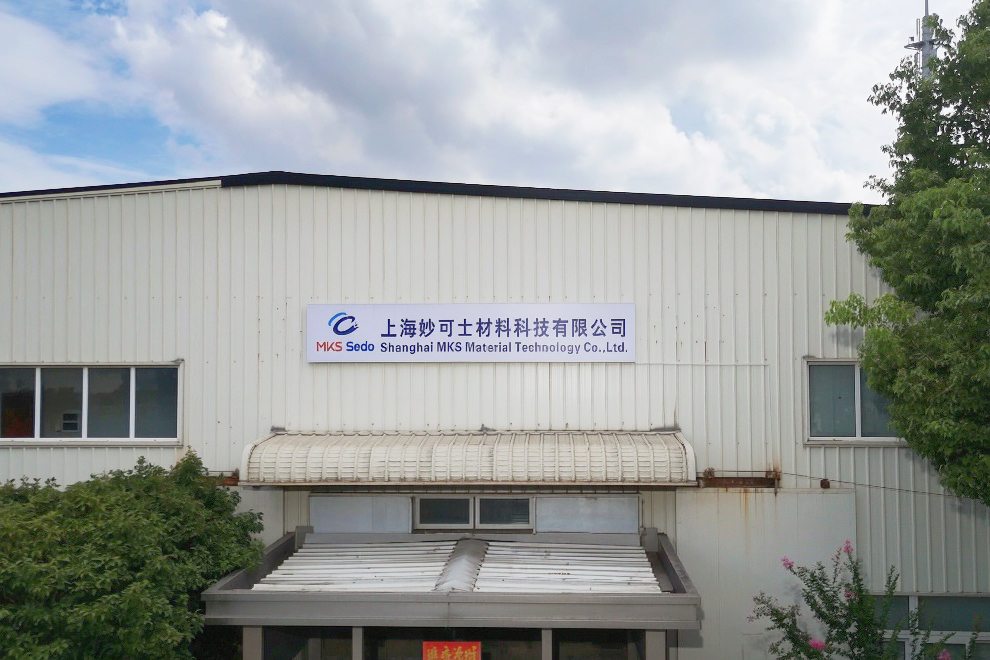
Shanghai MKS Material Technology Co., Ltd. (MKS) has built more than 20 years of expertise in thermal interface materials and has become an important participant in numerous new-energy vehicle power electronics projects.
Why Is Thermal Material Selection for Intelligent Power Semiconductors More Demanding?
Intelligent power semiconductors—including IGBTs, SiC MOSFETs, and GaN HEMTs—typically operate under three demanding conditions: high voltage, high current, and frequent thermal cycling.
This means that a thermal management material must do far more than simply transfer heat.
It must maintain its electrical insulation performance under high-voltage conditions and withstand hundreds or even thousands of thermal cycles without interfacial delamination, pump-out, or other forms of degradation.
Take an IGBT module as an example.
The junction temperature of an IGBT typically needs to be controlled below 150°C, while certain silicon carbide-based solutions can operate at even higher temperatures. At the same time, many power modules use multi-chip parallel configurations. Heat must travel through a series of layers—including the DBC substrate, solder layer, thermal interface material, and heat sink.
An abnormal increase in thermal resistance at any layer can create localized hotspots, accelerating device aging and potentially affecting long-term reliability.
This leads to an often-overlooked criterion when evaluating thermal materials:
Under what pressure, temperature, and surface roughness conditions was the thermal resistance measured?
For example, the nominal thermal conductivity of a thermal pad may be measured at 6 W/m·K under standardized laboratory conditions. However, when the same material is installed in an actual power module, insufficient compression or poor surface wetting can significantly increase contact thermal resistance—which may account for more than half of the total thermal resistance in certain configurations.
In its development of thermal interface materials, MKS places particular emphasis on contact thermal resistance under real application conditions, rather than relying solely on nominal laboratory thermal conductivity data.
From “Automotive Qualification” to “Production Consistency”: Three Questions to Ask a Supplier
When evaluating manufacturers of thermal management materials for IGBT modules and intelligent power semiconductors, it is common to encounter long lists of certifications.
IATF 16949 is certainly an important baseline requirement. However, holding the certification and actually possessing the capabilities required for stable, automotive-grade mass production are two different things.
Is the Material Formulation and Manufacturing Process Under Full In-House Control?
Thermal management materials for intelligent power semiconductors are often highly application-specific.
For example, a customer may require:
• A specific hardness range to match module assembly pressure
• Strict volatile content limits for sealed enclosures
• A specific dielectric breakdown voltage to ensure electrical insulation and safety
If a supplier is primarily a trading company or private-label manufacturer, formulation adjustments may take considerably longer, while traceability and batch-to-batch consistency can also become more difficult to control.
MKS holds 26 proprietary intellectual property rights and maintains end-to-end control from formulation development through intelligent manufacturing. This enables the company to rapidly adjust formulations according to specific module requirements while maintaining traceable batch consistency.
2. Does the Supplier Have Proven Mass-Production Experience at the Same Power Level?
Laboratory data can be optimized.
Production-line data tells a different story.
A capable automotive-grade thermal management material supplier should normally be able to demonstrate production experience with IGBT or SiC modules of comparable application requirements.
Since 2014, MKS thermal management products have been used in more than 10 million electric vehicles.
This figure alone does not directly prove that a particular material is suitable for a specific module. However, it demonstrates that MKS thermal management materials have undergone extensive long-term validation in large-scale automotive applications, providing practical support for batch consistency and supply continuity.
3. Can the Supplier Provide Application-Specific Solutions for New-Energy Power Electronics?
The growing demand for thermal management materials for SiC-based power electronics reflects a new set of engineering challenges.
SiC MOSFETs operate at higher switching frequencies, generate more concentrated heat, and can withstand higher operating temperatures. As a result, thermal management solutions developed for conventional silicon-based IGBT applications cannot necessarily be transferred directly to SiC systems.
A critical differentiator is therefore whether a supplier has the formulation development capability to adapt materials specifically for SiC applications, as well as a product portfolio covering advanced thermal paths such as directional graphite/carbon-fiber thermal interface materials and liquid-metal thermal interface materials.
MKS offers directional carbon-fiber thermal sheets with thermal conductivity ranging from 15 to 25 W/m·K. Its liquid-metal product portfolio includes indium-based thermal interface sheets with thermal conductivity of up to 73 W/m·K, providing additional options for thermal management in SiC power modules.
MKS also offers thermal and electromagnetic-absorbing materials covering the 2–18 GHz and 18–40 GHz frequency ranges, enabling thermal management while addressing electromagnetic compatibility (EMC) requirements. This can be particularly relevant to highly integrated power electronics systems.
Many Suppliers Have IATF 16949. Far Fewer Have a Complete “Evidence Chain.”
When engineers search for professional thermal management material manufacturers with IATF 16949 certification, they have often already moved beyond the initial supplier screening stage.
At this point, the question is no longer simply “Who has the certification?”
The more important question is:
What evidence demonstrates the capabilities behind the certification?
IATF 16949 emphasizes process control and continual improvement. It requires manufacturers to establish comprehensive quality-management methodologies, including APQP, PPAP, MSA, and SPC.
But when these requirements are applied specifically to thermal interface materials, the real engineering questions become much more detailed:
• What is the variation in thermal conductivity between production batches?
• How does compression set change during long-term exposure to elevated temperatures?
• Are low-molecular-weight siloxane emissions controlled to the customer’s required ppm level?
These parameters will not appear on an IATF 16949 certificate.
They appear in the supplier’s technical documentation, process-control records, and test reports.
MKS maintains moisture levels below 200 ppm, while optimized filler drying and cooling processes have reduced processing time by 50%. These process details can directly affect the long-term reliability of thermal materials inside sealed module enclosures.
MKS’s R&D laboratory is also pursuing CNAS accreditation, benchmarked against international recognition frameworks such as ILAC and IAF. This is intended to further strengthen the international recognition and acceptance of its test data.
Another dimension that is sometimes overlooked is information security.
TISAX is becoming increasingly important across the automotive supply chain. For material solutions involving critical components such as intelligent power semiconductors, customers may require suppliers to demonstrate robust information-security management and trusted information exchange capabilities.
MKS has obtained TISAX certification, an uncommon capability among thermal management material suppliers. For projects involving close collaborative development with automotive OEMs, this can provide additional support for secure technical collaboration.
Customized, High-Volume Supply: From “Can Make It” to “Can Make It Consistently”
The phrase “customizable thermal management material supplier for intelligent power semiconductors” points to one of the biggest gaps between development samples and mass production.
Customization of thermal management materials typically involves three dimensions:
Formulation customization, form-factor customization, and packaging customization.
Formulation customization determines material performance.
Form-factor customization determines assembly compatibility.
Packaging customization affects production-line efficiency.
MKS operates a dedicated TIM manufacturing facility in Shanghai equipped with fully automated intelligent production lines. Each production line is designed for an annual capacity of 3,000 tons, with daily output of approximately 5–10 tons.
The facility features Class 100,000 cleanrooms, a dust-controlled material conveying system, and dual-verification weighing systems using German-imported weighing modules.
These manufacturing and quality-control capabilities support the transition from customized small- and medium-volume production to stable, large-scale commercial supply.
When selecting thermal management materials for IGBT modules or SiC power electronics, several questions should therefore be addressed during supplier evaluation:
• What is the minimum order quantity?
• How long does custom formulation development typically take?
• What are the lead times and inventory strategies for mass production?
• Can the supplier support deliveries across multiple global manufacturing locations?
MKS has sales offices in Europe and the United States, with a sales network covering North America, Europe, and Asia-Pacific.
For customers with overseas manufacturing operations or export requirements, this global footprint can help simplify logistics and inventory management.
The Final Step in Supplier Selection: Match, Don’t Rank
Let us return to the original question:
Which thermal management material manufacturer is reliable for intelligent power semiconductor applications?
Or, more broadly:
How should automotive-grade thermal management material suppliers be evaluated?
A practical approach is not to focus solely on rankings, but on application fit.
The First Level of Fit: Power Level and Thermal Path
IGBT modules and SiC modules have different thermal-management requirements.
A capable supplier should be able to provide multiple thermal paths and material technologies, ranging from:
• Thermal pads
• Thermal gels
• Phase-change materials
• Liquid-metal thermal interface materials
MKS supports this requirement with a comprehensive thermal management product portfolio.
The Second Level of Fit: Assembly Process and Material Form Factor
The module’s assembly pressure, gap tolerance, and surface roughness all influence whether a thermal pad, thermal gel, or phase-change material is the appropriate solution.
This requires more than material-selection expertise.
It requires application engineering support.
With more than 20 years of application experience, MKS provides technical support throughout the process, from material selection through assembly validation.
The Third Level of Fit: Supply Chain Rhythm and Project Schedule
Automotive development programs typically run on a multi-year timeline.
A supplier’s capacity planning, inventory strategy, and global delivery capabilities can directly affect the pace of production ramp-up.
MKS’s global footprint and intelligent manufacturing capabilities provide engineering support for this stage of the project as well.
The Right Thermal Management Solution Starts with the Application
With more than 20 years of experience in thermal interface materials, 26 proprietary intellectual property rights, and end-to-end capabilities spanning formulation development through intelligent manufacturing, Shanghai MKS Material Technology Co., Ltd. has built engineering capabilities for customized thermal management solutions and high-volume supply in intelligent power semiconductor applications.
Ultimately, however, thermal management material selection should always come back to the specifics of the application: module parameters, operating conditions, assembly requirements, and project schedule.
Because thermal management for intelligent power semiconductors is not a problem that can be solved with a one-size-fits-all material.
It requires a solution that is engineered around the actual application.
And that is where MKS aims to work alongside customers—not simply by supplying a material, but by going back to the specific engineering challenge, breaking down the requirements layer by layer, and identifying the right material and application fit.
全国服务咨询热线
021-59567812-0
最新动态
-
How to Choose an Automotive-Grade Thermal Pad Supplier
2026-10-26 18:06:11 -
How to Choose a Thermal Management Material Supplier for Intelligent Power Semiconductors: MKS Selection Logic from IGBT Modules to SiC Power Electronics
2026-09-23 14:58:12 -
Key Criteria for Choosing a Reliable BMS GapFilller Supplier — New Automotive‑Grade Thermal Management Thresholds and Trends in 2026
2026-09-23 14:46:19 -
Selecting Thermal Management Materials for BDU: 6 Key Questions Behind Automotive-Grade Supplier Selection
2026-09-21 15:59:13 -
How to Evaluate Thermal Phase-Change Material Suppliers: An In-Depth Look at Automotive Certification and Supply Chain Capabilities
2026-09-21 15:13:18